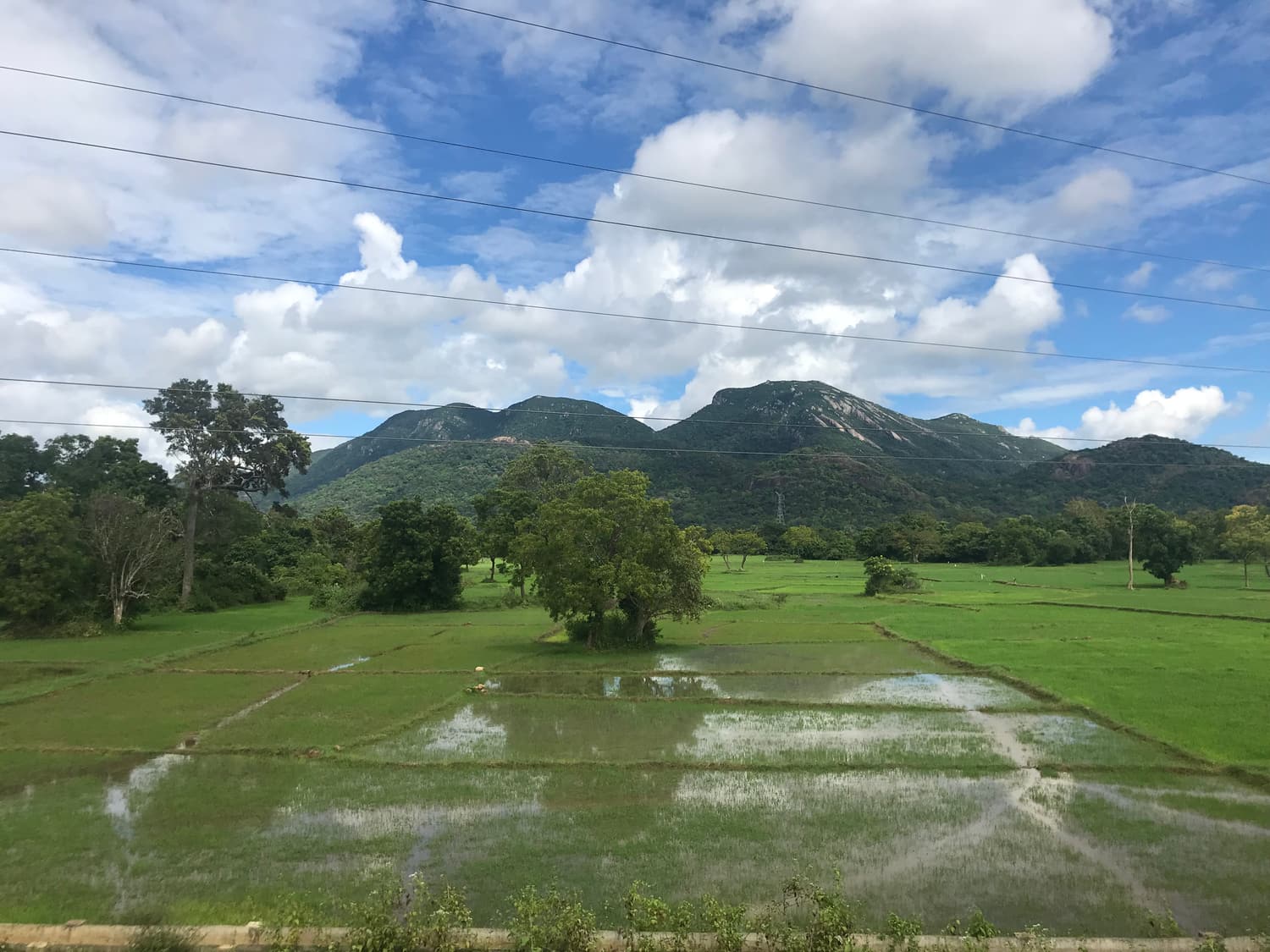
Dambulla lies in Sri Lanka’s dry zone, which follows a different rhythm from the beaches of the south-west. It is warm all year — typically 30–34 °C by day and 21–24 °C at night — and most of its rain falls with the inter-monsoon and north-east monsoon, roughly October to January. The south-west monsoon (May–September) that soaks the west coast leaves the Cultural Triangle largely dry.
The short answer: January to April for the classic high season, June to September for dry weather, fewer tourists and the elephant gathering.
Dambulla month by month
| Month | Weather | Crowds | Verdict |
|---|---|---|---|
| January | Showers tailing off, green | High | Lush and pleasant; some rain early in the month |
| February | Dry, warm | High | Excellent — one of the best months |
| March | Dry, hot | High | Excellent; hot by midday |
| April | Hot, some inter-monsoon storms | High | Good; New Year festivities mid-month |
| May | Hot, occasional storms | Moderate | Quieter; Vesak full-moon celebrations |
| June | Dry, breezy | Moderate | Very good, and good value |
| July | Dry | Rising | The elephant gathering begins |
| August | Dry, hot | High | Peak gathering; Kandy Perahera nearby |
| September | Dry, hot | Moderate | Gathering continues; fewer crowds |
| October | Inter-monsoon rain begins | Low | Afternoon downpours; cheap and quiet |
| November | Often the wettest month | Low | Heavy rain some days; very green |
| December | Rainy spells | Rising | Mixed weather; busy over the holidays |
January to April — the classic high season
The rains clear during January, leaving the countryside green and the reservoirs full. February and March are dry, sunny and hot by midday, and this is when most European visitors come — book Sigiriya-area hotels and private drivers early. April is hotter still, with occasional late-afternoon storms, and the Sinhala and Tamil New Year (around 13–14 April) brings festivities and busy roads.
May to September — dry here, wet on the west coast
This is the Cultural Triangle’s best-kept secret. The south-west monsoon brings rain to Colombo and the southern beaches, but Dambulla stays mostly dry, breezy and sunny. It is also the season of the elephant gathering at Minneriya, from roughly July to October, peaking in August and September. Pair it with the east-coast beaches around Trincomalee, which are at their best at the same time.
October to December — the rainy season
The inter-monsoon and north-east monsoon bring the year’s heaviest rain, often as dramatic afternoon storms. Sights stay open, prices drop and the landscape turns emerald, but climbs can be slippery and some days are washed out. Keep your plans flexible.
Festivals worth planning around
- Vesak (May full moon): Sri Lanka’s biggest Buddhist festival, with lanterns, free food stalls (dansal) and illuminated pandals.
- Esala Perahera (July/August): Kandy’s great procession of dancers, drummers and elephants, two hours south.
- Poya days: every full moon is a public holiday; temples are busy and alcohol is not sold.
When to avoid
- November if you want guaranteed dry weather — it is usually the wettest month.
- Midday at Sigiriya in any month, for the heat and the queues.
- Christmas–New Year and Easter if you have not booked ahead — hotels fill up.